
Responsibility
Four parties, and the two in the middle are not the agent
The operator is direct about this in a way commercial sites usually are not. Its about page says international shipping services are provided by third parties. Step nine of the beginner guide lists delays, customs confiscation, taxes, damage and loss, and says it cannot control or prevent those in the hands of third party logistics companies or customs.
That is not a disclaimer to skim. It tells you which problems have an owner you can write to and which do not, and a consolidated box spends more of its life in the lanes where the answer is no. The money side of the same split is on the costs page, and the sequence that gets a parcel this far is the combining walkthrough.
The two checks the operator explicitly hands to you
The forwarding page carries a friendly tips box with two lines in it, and both are aimed squarely at people combining several things.
The first: do not share your tracking number with anyone, because it is the only credential to confirm parcel ownership. In a warehouse holding parcels for thousands of people, that number is how yours is known to be yours.
The second: for orders with six or more items, verify quantity against the official product photos yourself, and raise any disputes before shipment. Six is not a big haul. And the deadline is dispatch, not delivery, which means the check has to happen in the window between the inspection photos arriving and you submitting the parcel.
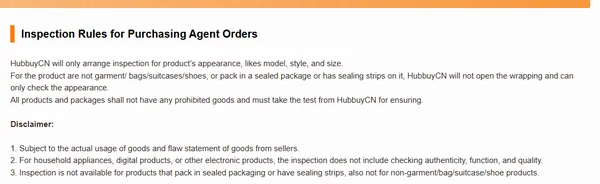
Inspection itself has a defined scope. The help centre says it covers appearance, model, style and size, that sealed goods are not opened, and that electronics are not tested for authenticity or function. Photos tell you what arrived and what it looks like, not whether it works. How long you can leave the goods sitting while you decide is on the storage page.
The pre flight pass, in the order it saves you money
Four things worth doing while the box is still open and still yours to change.

Read the inspection photos against what you ordered
Colour, model and size are what the inspection covers, so those are what the photos can settle. Compare them to the listing, not to your memory of the listing.
Take the restricted list seriously, at parcel level
The international parcel agreement lists what cannot be mailed: flammable, explosive, corrosive, radioactive or toxic items, currencies, perishables, live animals, items whose packaging could harm handlers, and more. Restrictions attach to the parcel. One item can hold up everything sharing the box, and the compensation terms exclude goods confiscated for breaking these rules.
Declare accurately, because the declaration travels with it
The forwarding form asks for an item value and a quantity, and the page warns that inaccurate declaration information can lead to the package being returned or inspected by customs. The tariff reference page adds its own caveat: it says the information is collected from internet data, is for reference only, and cannot be treated as a standard guide.
Decide on the extras deliberately
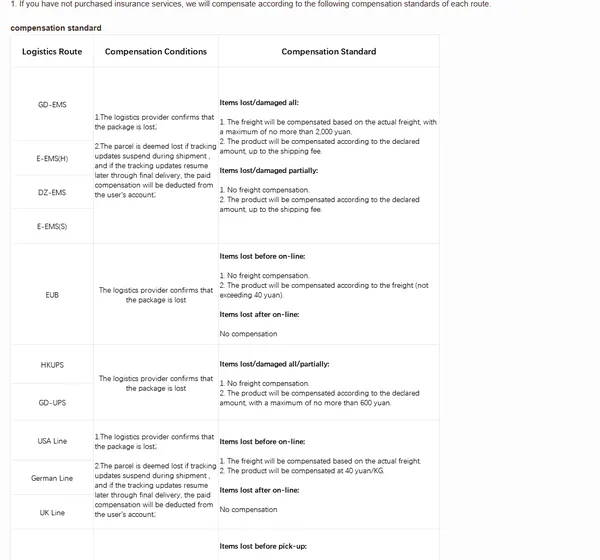
Package disposal reduces volume by stripping retail packaging. Reinforcement adds protection and size. Insurance changes what happens if the parcel is lost, and without it the operator says it compensates according to the standard for each route.
After it lands
Three windows, and they close whether or not you noticed
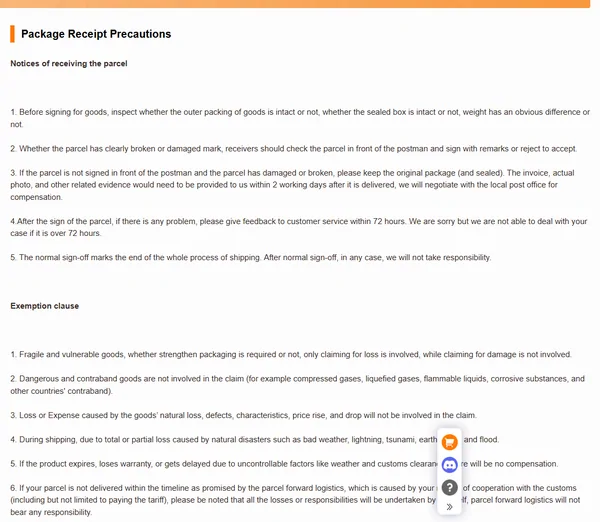
The receiving guidelines are specific, and they are the part of this site most worth reading before the parcel arrives rather than after.
At the door: check the outer packaging, whether the sealed box is intact, and whether the weight is obviously different. If there is visible damage, the guidance is to open it in front of the courier and either sign with remarks or refuse it.
Within two working days: if you did not open it in front of the courier and the parcel turns out damaged, keep the original packaging sealed and provide the invoice, photos and other evidence, and the operator says it will negotiate with the local post office.
Within 72 hours: anything else about the parcel goes to support inside that window, and the page says cases past it cannot be handled. After a normal signature the operator states the shipping process is complete and it does not take responsibility.
What is not covered, stated plainly
The compensation standard is worth knowing before you choose what to put in a shared box, because several exclusions are about exactly the situation a big consolidated parcel creates.
The one that catches people: if the parcel arrives intact, with no sign of having been opened and no reduction in weight, but items inside are missing or damaged, no compensation is provided. There are also exclusions for force majeure, for goods confiscated for breaking shipping restrictions, for cases where the customer cannot provide the required proof, for claims made after the inquiry period, and for parcels detained or destroyed under the destination country laws.
Two more from the receiving page: fragile goods are only covered for loss, not for damage, whether or not you paid for reinforcement, and losses caused by refusing to cooperate with customs, including declining to pay duty, are yours.
How to read QC before adding an item to the parcel
Open the full-size pictures and work from the order record. First confirm the item and quantity. Next compare visible colour, model, labels and included accessories. Finally identify what the photos do not show: an inner pocket, a size label on the second shoe or a measured garment length.
If you ordered a two-piece set and only one piece appears, ask for a count and a photo of the complete set. If you need a sleeve length, state the endpoints and centimetres. A seller size chart and a warehouse label cannot establish the actual measurement on their own.
Keep the relevant photo and question with the order number. Wait for a usable answer before dispatch where the issue affects whether you want the item; check the seller return conditions promptly.